UK · UAE · International

UK · UAE · International
Everything you need to know about routes, stations, fares, booking, travel times, and what the UAE's national passenger railway means for travellers and property investors.
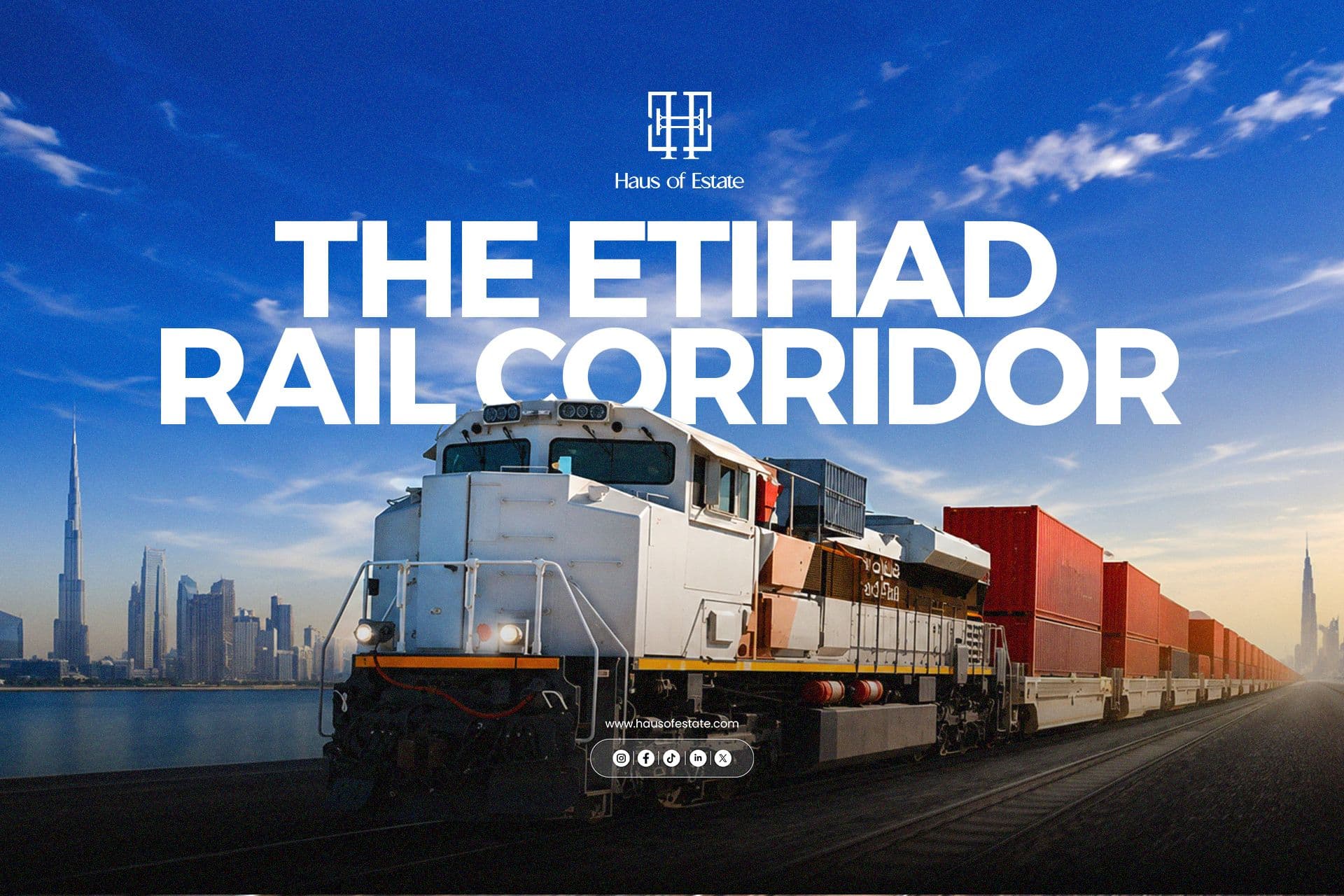
After more than a decade of anticipation, the United Arab Emirates (UAE) has inaugurated its national passenger railway. As officially announced by Etihad Rail under the governance of board chairman His Highness Sheikh Theyab bin Mohamed bin Zayed Al Nahyan, the maiden passenger service departed on 30 June 2026, following its high-profile inauguration by the Crown Prince of Abu Dhabi, His Highness Sheikh Khaled bin Mohamed bin Zayed Al Nahyan.
This milestone links Abu Dhabi and Fujairah, reducing a nearly three-hour highway drive into a seamless 1-hour-45-minute journey across desert dunes, scenic mountain passes, and coastal landscapes.
This guide serves as your definitive manual for navigating the network. It outlines the current operations, upcoming milestones, ticketing protocols, fare structures, and strategies for traversing the Abu Dhabi (AUH) → Dubai (DXB) → Sharjah (SHJ) → Fujairah (FUJ) corridor. All data is verified as of mid-2026 via official platform releases and news channels in the UAE, structured around the phased rollout necessary for your itinerary planning.
Operational Timeline
Let’s take a quick look at what’s live and what’s upcoming
Milestone
Date
Operational Status
Introductory Phase
30 June 2026
Abu Dhabi ⇄ Fujairah passenger service commences
Official Network Launch
30 September 2026
Dubai Station (Jumeirah Golf Estates) & Al Dhaid Station (Sharjah) open
Al Dhafra Expansion
30 November 2026
Madinat Zayed & Liwa stations operational (ahead of schedule)
Western Extension
30 December 2026
Al Sila, Al Dhannah, and Al Mirfa integrated
Phase One Conclusion
30 March 2027
Sharjah University City Station opens
Critical Notice: According to Etihad Rail's deployment schedule, the sole operational passenger route runs exclusively between Abu Dhabi and Fujairah. However, the highly anticipated direct Abu Dhabi–Dubai and Dubai–Fujairah links will go live upon the opening of the Dubai station on 30 September 2026.
To help you navigate this massive transit rollout, this guide is divided into distinct sections and parts. Let’s take a look below.
Part 1: Network Architecture
Understanding Etihad Rail
Conceived as a cornerstone of the nation’s "Projects of the 50" initiative in 2021, Etihad Rail is now set to transition the UAE’s world-class passenger network. Upon full completion of the initial phase, the system will span approximately 900 kilometers, connecting 11 key urban and regional hubs across all seven emirates starting from Al Sila near the Saudi border to the eastern coastline of Fujairah. It is estimated that this project will serve an estimated 10 million passengers annually.
Station directory (West to East)
Al Sila → Al Dhannah → Al Mirfa → Madinat Zayed → Mezairaa → Mohamed Bin Zayed City (Abu Dhabi) → Al Faya → Dubai (Jumeirah Golf Estates) → University City → Sharjah → Al Dhaid → Fujairah
Speed clarification
Standard regional trains operate at speeds of up to 200 km/h and should not be confused with the distinct high-speed infrastructure initiative:
Journey durations (standard network layout)
Part 2: Corridor Analysis (AUH → DXB → SHJ → FUJ)
Abu Dhabi — Mohamed Bin Zayed City Station
The Abu Dhabi passenger hub is at Mohamed Bin Zayed City (ME10). It's the anchor of the current live route and operates daily, 5am to 11pm.Getting to/from it is built around integration: two bus routes (MR1 and MR2) connect the station with the Main and Al Zahya bus stations in both directions, and shuttle buses run to three key city locations — ADNOC HQ on Corniche Road, ADNEC Centre on Al Khaleej Al Arabi Street, and Reem Mall on Reem Island.
Dubai — Jumeirah Golf Estates Station (Opening 30 September 2026)
Situated along Sheikh Mohammed Bin Zayed Road in southern Dubai, this station is integrated directly with the Jumeirah Golf Estates Metro Station, establishing a seamless interchange with the Dubai Metro Red Line (and the prospective Gold Line under the 2032 rail master plan). As coordinated with the Dubai Roads and Transport Authority (RTA), the station features dedicated feeder fleets and taxi bays, alongside full compatibility for Nol card fare settlements across both networks.
Sharjah — Al Dhaid & University City
Sharjah gets two stations in this phase: Al Dhaid (opening with the network launch on 30 September 2026) and University City (30 March 2027, completing the first phase).
Fujairah gets a scenic terminus
The Fujairah end is the reason this route is being called the most scenic ride in the country. In a single trip you move from the open desert with dunes running alongside the track, into the massive Hajar Mountains where the line passes through purpose-built tunnels and then out to the east coast, with the Gulf of Oman opening up ahead.
A friendly traveler tip: In Fujairah, Al Hilal station was noted early on as the first fully completed and best-equipped station with parking, car rental, a taxi rank, ticketing machines, waiting areas, and food and drink outlets. Good choice for a first, low-stress journey if you’d like to consider it during your trip.
Part 3: Fare Structures and Service Classes
Fares below are the introductory Abu Dhabi–Fujairah prices, currently offered with a 50% launch discount, as detailed on the official booking portal (etihadrail.ae). Pricing for routes launching from September 2026 (including Abu Dhabi–Dubai) remain to be formally published.
Service Class
Introductory Fare
Standard Fare
Comfort Class
From AED 55
AED 109
Premium Class
From AED 120
AED 239
Flexible fare tiers (within each class)
Passengers select a class paired with a specific modification tier:
Discounted fares are also available for children and senior citizens. An optional shuttle bus add-on is around Dh10.
Part 4: How to Book (Step by Step)
Booking opened on 23 June 2026 and is realistically straightforward. Note that early inaugural journeys sold out fast with a record of 5,000 seats sold in two days, and 10,000+ tickets within the first week. So request you to book ahead, especially for weekends.
Part 5: Traveller’s Experience
Each 13-car trainset accommodates up to 400 passengers across two classes: Comfort and Premium configurations, both offering guaranteed seating and onboarded high-speed connectivity to Wi-Fi. Etihad Rail partnered with Italian luxury hospitality group Arsenale for the onboard offering, aiming for Orient Express–style touches on a modern network.
What to expect inside:
Part 6: Plan your Journey & benefit from practical logistics guide
A practical checklist for actually pulling off the trip:
Before you go
On the day
Timing strategy
Last-mile planning
Why investors and property owners must capitalise on the corridor. Turn to Haus of Estate for a perspective.
Major infrastructure transformations like Etihad Rail do more than just shorten commutes. They completely rewrite real estate economics. By shrinking the travel distance between Abu Dhabi, Dubai, Sharjah, and Fujairah, the national rail network is igniting high-growth corridors, decentralising urban centers, and driving capital appreciation across previously underserved sub-markets.
Navigating these evolving property landscapes demands specialised insight, zero transaction friction, and a trusted advisory network. Property owners and capital investors turn to Haus of Estate for distinct advantages:
Looking ahead
Looking beyond the initial deployment, Etihad Rail is actively evaluating inter-emirate extensions alongside long-term integration into the overarching GCC Railway network, designed to link the UAE directly with the Kingdom of Saudi Arabia and the Sultanate of Oman. Combined with the separate 350 km/h high-speed line targeted for around 2030, the direction is clear: a low-carbon transport spine for the country and ultimately a boost for the overall region.
At a Glance
Fares, timings and station dates are subject to change. Always confirm the latest details on the official Etihad Rail website or app before travelling.
Written by