UK · UAE · International

UK · UAE · International
Dubai's tech revolution. Let’s take a look inside the Middle East's fastest-growing tech hub.
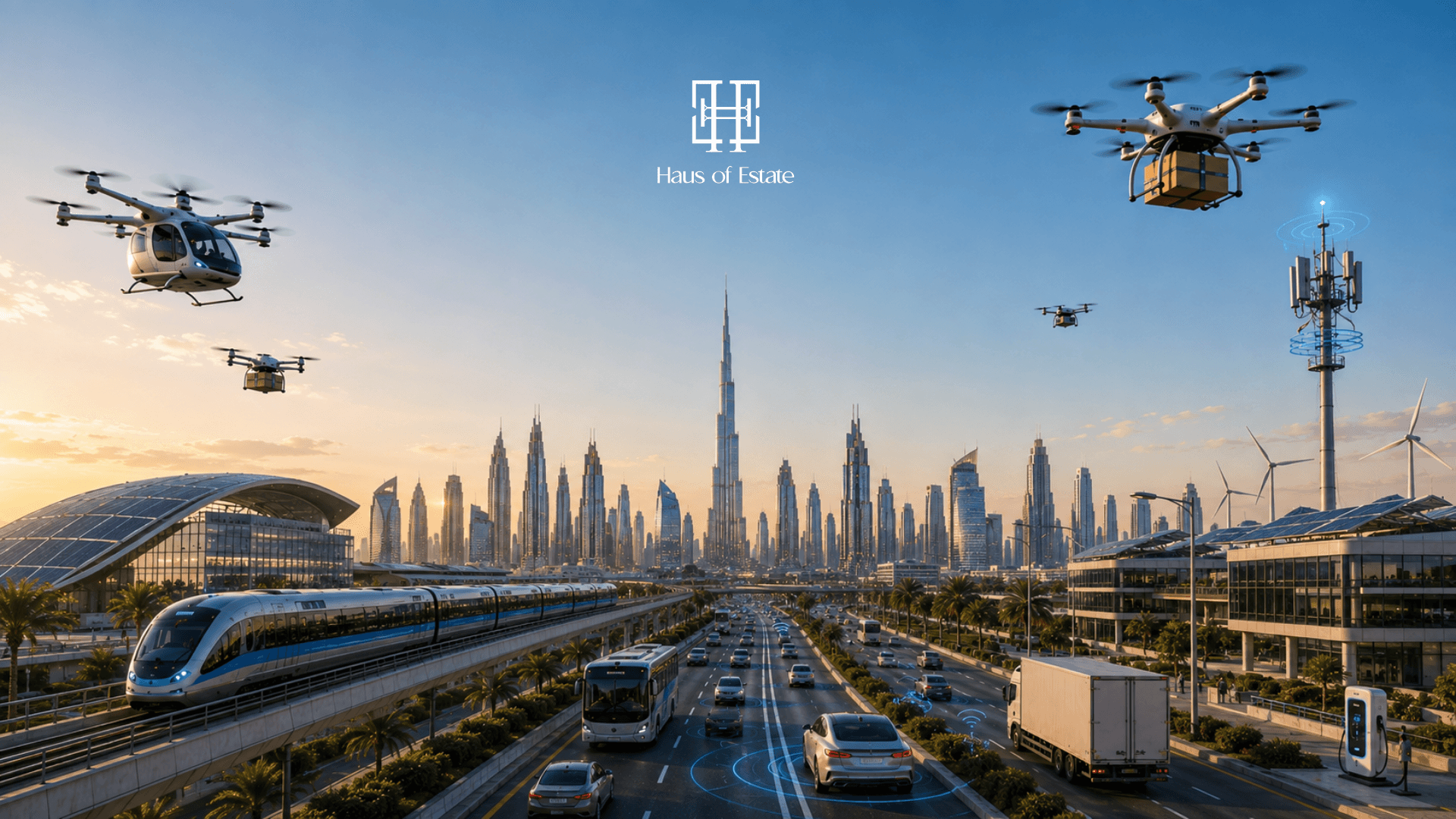
Ask someone what "Dubai IT" means and you'll rarely get one thorough answer. A fintech founder will tell you it is a regulatory paradise for the fintech enthusiasts. A cybersecurity engineer will call it a high-stakes fortress. An AI researcher will tell you it is the only place on Earth where autonomous agents are truly finding jobs of being deployed into municipal workflows today.
Well, they are all right and that’s exactly the point. There's no single company or corporate titan driving the "Dubai IT" concept. It's a hyper-connected ecosystem consisting of software developers, multi-cloud providers, AI startups and labs, cybersecurity firms, telecom networks, fintech disruptors, and government bodies — hubbed inside one of the most ambitious digital transformation projects in the world to build the future, test it in real-time, and scale it fast.
Over the past decade, Dubai has positioned itself as a global tech powerhouse. It has seen a paradigm shift from a regional trade and tourism hub to a serious contender in the global tech capital area—competing neck-and-neck with the likes of Singapore, Berlin, and Austin in terms of growth and infrastructure development.
Here is what is actually going on under the hood, and why the tech world’s attention is shifting east.
What Falls Under "Dubai IT"
The sector spans a wide range of disciplines, including:
The Living Lab and why the Ecosystem works well?
In most global hubs, technology moves fast and government policy moves are slow paced. Dubai flipped the script with the massive Dubai Economic Agenda (D33), which aims to double the city's economy and generate billions from digital transformation.
Government officials, technology executives, CIOs, and CISOs gathered recently at the GovTech Innovation Forum & Awards in Dubai to recognize organizations and individuals driving the UAE's digital government and technology innovation efforts. Notably, the Dubai Multi Commodities Centre (DMCC) was recently named Dubai IT Department of the Year for its aggressive integration of AI and immersive digital tech into day-to-day trade operations — a sign that public-sector IT in Dubai isn't just administrative, it's actively competing on innovation.
The Big Fact: Dubai’s digital-first playbook gets results. Boston Consulting Group (BCG) ranked Dubai #1 globally for the adoption of AI technologies and smart city solutions, and #2 overall in their Intelligent Cities Index.
5 Tech Trends Defining the Ecosystem
If you walk into a board room or tech incubator in Dubai right now, these are the five macro trends dominating the whiteboard:
1. The Autonomous AI Agent Boom
Basic chatbot automation is outdated now. The focus has shifted to autonomous AI agents where digital team members are capable of planning complex workflows, making logistics decisions, and managing customer touchpoints without human hand-holding. In fact, AI and machine learning are officially the #1 most requested investment area for enterprise IT buyers across the UAE.
2. Hyperscale Data Infrastructure
Operating frontier AI models on lightweight servers is impossible. Hence, massive cloud adoption and AI workloads are the next-gen with data center capacity across the Middle East is exploding. The focus in Dubai isn't just raw processing power, it’s more about building green, ultra-resilient data infrastructure designed to align with the Dubai Clean Energy Strategy concept.
3. High-Stakes Cybersecurity
When your entire government and commercial banking sector runs digitally, security is the prime factor for the leaders of the country. Based on this survival metric, widespread hybrid work models and smart-grid infrastructure, enterprise resilience and threat detection are among the fastest-growing sub-sectors in the region.
4. Cloud & Mobile-first as a Baseline
All on-premises hardware is virtually extinct. Companies operating in Dubai now build cloud-native by default. Coupled with a hyper-connected, smartphone-saturated population, mobile-first SaaS architecture is mandatory for anyone looking to capture market share.
5. Fintech balances Economic Outputs
Driven by the Dubai International Financial Centre (DIFC) which manages over $1 trillion in regional liquid wealth, the city has become a magnet for fintech disruptors. From cross-border digital payments to tokenised real estate assets, financial technology is actively redefining how capital moves through the entire region.
What's Actually Happening Right Now?
The baseline question is: Why are founders, engineers, and venture capitalists flooding into the emirate? Is Dubai really witnessing tech global talent growth?
It comes down to a few combinations:
There are major structural reasons IT companies keep setting up shop in Dubai. Strong government support for digital transformation, tax-friendly policies, world-class infrastructure, and targeted initiatives around AI, smart cities, and innovation-led growth all make the emirate an attractive base, particularly for companies looking to serve both regional and international markets from one location.
The Bigger Picture
Dubai's push is explicitly tied to broader UAE-wide ambitions (national digital transformation goals and long-term sustainability strategy) and to positioning the country as a fully integrated smart nation powered by artificial intelligence, blockchain, cloud computing, smart mobility, digital logistics, fintech, cybersecurity, and Industry 4.0 technologies.
For businesses, investors, or professionals eyeing the region, the takeaway is straightforward: Dubai's IT sector is rapidly becoming the core engine of the economy itself and has become a place where the prototype for the next-generation digital nation is actively being written and deployed in real-time.
Written by